By Leslie Lindsay 
Here’s a special treat–interview with mom times 4 and author of the recently released children’s book, hi My nAMe is MiLLY, Heather Ziessler. 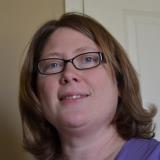 [all images courtesy of Heather Ziessler]
Thanks a bunch for taking the time to chat with us, Heather. We are super-excited to learn about your new book for kids on apraxia, specifically siblings. Let’s start by getting to know you a bit.
Thank you for having me here. I am delighted to share my passion for helping other families who are experiencing CAS.
L4K: First of all, you are a busy mother of four—one of which has CAS. Can you tell us a little about the family you are raising and how they have accepted your child with apraxia?
H.Z.: I certainly can, Leslie. I am married with 4 children, 3 boys and a girl who are currently in elementary and middle school. As far as sibling acceptance within the family goes, the children have never known anything different. We have worked very hard as a family to provide a loving, supportive environment for each of the children to thrive in. This involves lots of communication and individual time with each of them.
L4K: I understand you have a background in sociology. How do you think your education prepared you for raising a child with apraxia? In what ways?
H.Z.: Sociology by one definition is the study of social problems. So being non-verbal in a verbal world is a social challenge. This in turn, leads back to the main definition of sociology which is the study of cultures, more specifically, the study of social relationships between people. Surprisingly, the degree has been very helpful. It has provided a framework of reference, in regards to how various people treat Malcolm. It is so easy to be caught up in medical or therapy worlds and how those institutions relate to a person as compared to providing typical childhood experiences on a regular basis. It is a balancing act, to say the least. It also helps that I have a natural, life long, curiosity to understand what is going on inside a person. What makes them tick? Being able to understand and read between the lines of apraxia research is also a benefit. These skills enable me to be a better advocate for all of my children.
L4K: How did you dream up the idea to write a book for children about apraxia? I am assuming it all came to you as a mom…but maybe I am wrong? 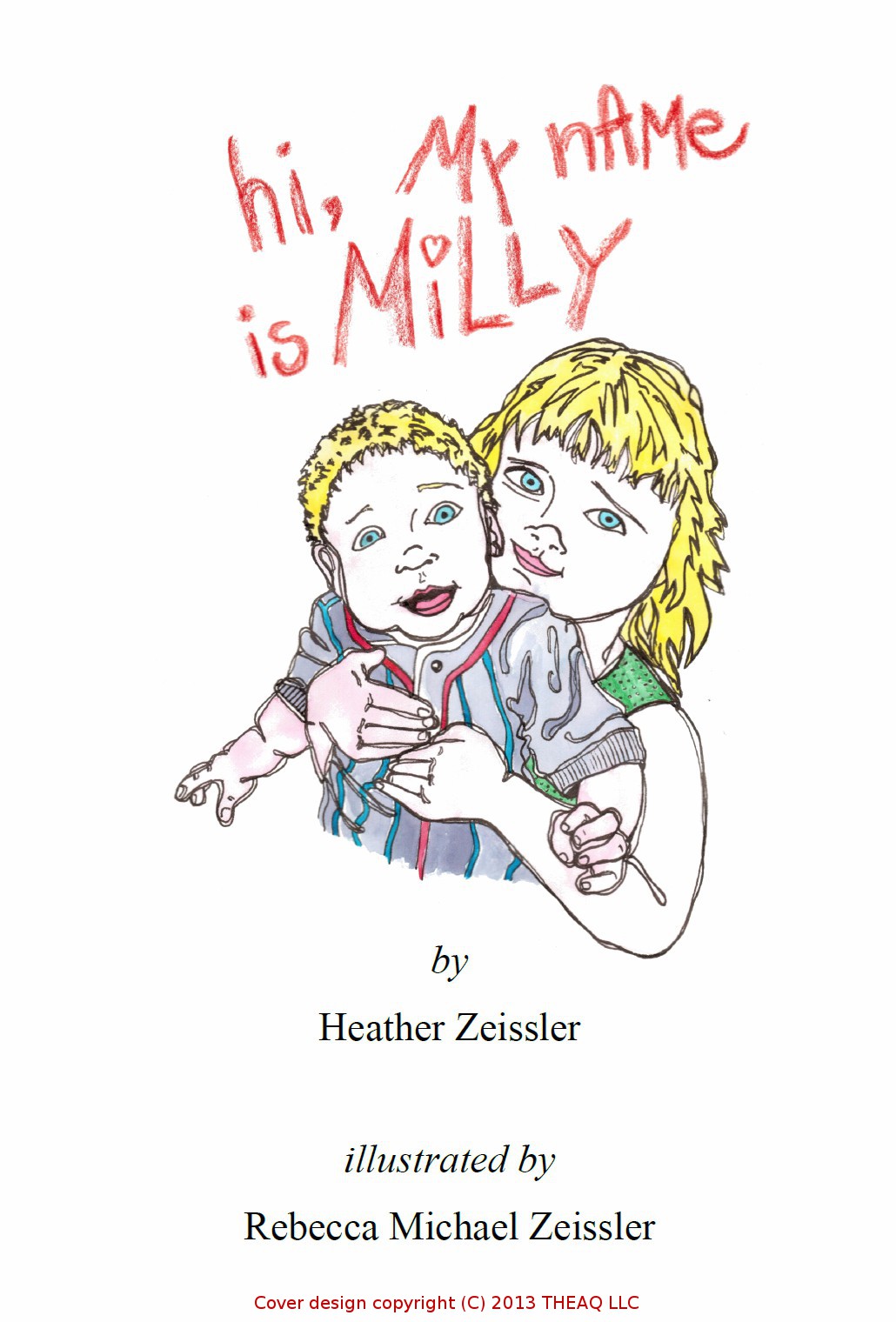
H.Z.: I didn’t dream this up; I LIVED it. [chuckle] When Malcolm was first diagnosed, I had a very verbal 5 year-old, a 1 year old, and was pregnant with our 4th child. My husband was out of town quite a bit for work, so things were beyond crazy in our house. It didn’t help matters that the extended family was convinced that Malcolm would simply “grow out of it.” I looked and looked for a book to read to my 5 year old about what it was like to have a non-verbal sibling. So, I finally took the advice of author Toni Morrison, Pulitzer Prize and Noble Prize for literature winner who said, “If there is a book you really want to read but it hasn’t been written yet, then you must write it.” “hi, My nAMe is MiLLY” is the direct result.
L4K: I have to ask about the title—specifically it’s appearance in upper and lower case letters. Was this intentional on your part? And if so, can you share the significance? Funny you should ask, Leslie. The book, “hi, My nAMe is MiLLY” is written from 5 year old Milly’s perspective. Yes, it was intentional and the primary goal is to remind the reader that this is a book from five year old sister Milly’s perspective.
L4K: What do you think siblings of children with apraxia struggle with the most?
H.Z.: I think the siblings of apraxic children struggle with many of the same issues of neuro-typical children. This is not an inclusive list by any means: Who does Mom or Dad love more? Am I getting my share of the attention? Are they interested in me? In addition to, there are other themes that have come up in our experience; such as, the feeling of protectiveness towards the CAS sibling, more so than the others.
L4K: How can siblings work with one another in the day-to-day struggles of CAS? Do you see them as an instrument in the overall resolution of the speech disorder. How have your own children worked with your child?
H.Z.: Leslie, I firmly believe that the immediate family is the first and best teacher of our children. The siblings of children with apraxia, have a monumental task. They not only teach each other the typical things, they are also responsible for giving the apraxic child their first examples of interpersonal communication. The siblings provide a source of strength and also may act as interpreters, when interacting with children outside of the family. The siblings are instrumental to each other in developing friendship skills. The siblings also have the ability to bring speech therapy into play on a peer level basis. What I mean by this is that the siblings can embrace ‘therapy games’ as regular play. They can be the informal follow-through to regular therapy. One of our speech therapist’s said that the younger sibling of a CAS child pushes more than she can pull in terms of developing speech. Several examples of how siblings have incorporated therapy into play are given in the book, “hi, My nAMe is MiLLY.” [this image from http://www.sheknows.com/parenting/articles/847367/middle-child-syndrome, to represent siblings] 
L4K: What advice would you give to a parent(s) just learning of their child’s diagnosis?
H.Z.: Advice is easy to give, but hard to take. I think back to what I would have liked to have known when our journey started. First, remember this is a marathon, not a sprint. It will take time. There will be successes and struggles, try to remember to look at the forest and not the trees. Educate yourself, so that you in turn, can educate others. Make time for each child to have one on one time with their parent(s). Make time for your spouse! Read to your child(ren), even though your CAS child may not respond with the same verbal cues as the other child(ren). Don’t assume that they do not understand the story. There is an amazing person on the inside. Don’t sell them short.
Wow! Thank you, Heather! That was truly empowering. We wish you and your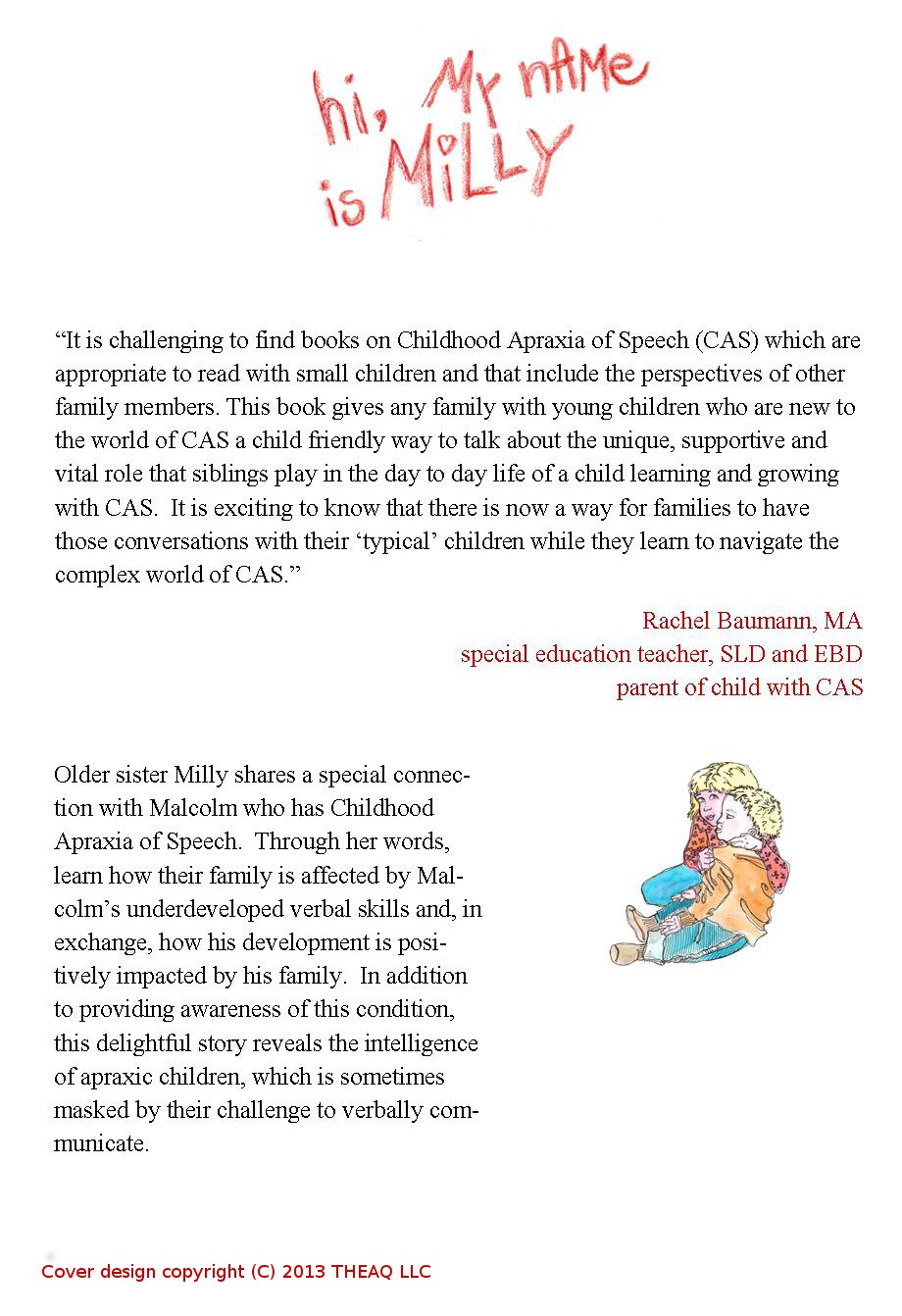 family much success with your book.
**WINNERS ARE: Tori S. of Georgia and Lorrie Mc of Ontario Canada. Thank you ALL for your comments and loyal readership***
Now, it’s give-a-way time! Heather has generously offered two complimentary copies of “hi, My nAMe is MiLLY” to be given away to two lucky blog readers. Here’s what you need to do: Leave a comment either on this blog or by dropping me a line at leslie_lindsay@hotmail.com. The subject line: Milly. Your email needs to say how your family can benefit from the book. Sorry, but Facebook comments will not be accepted. Contest runs Monday, March 25th thru Friday, March 29th at 5pm. Names will be drawn at random. You will be contacted by email if you are the winner(s). Kindly respond quickly with your mailing address, otherwise another name will be drawn. Your book will mail from Minnesota via US mail.


 Leslie A. Lindsay
Leave a reply to Melody Cancel reply