By Leslie Lindsay
(An excerpt from Speaking of Apraxia: A Paren’ts Guide to Childhood Apraxia of Speech. Chapter 5: “Getting the Diagnosis and Coping with Your Initial Reactions”). 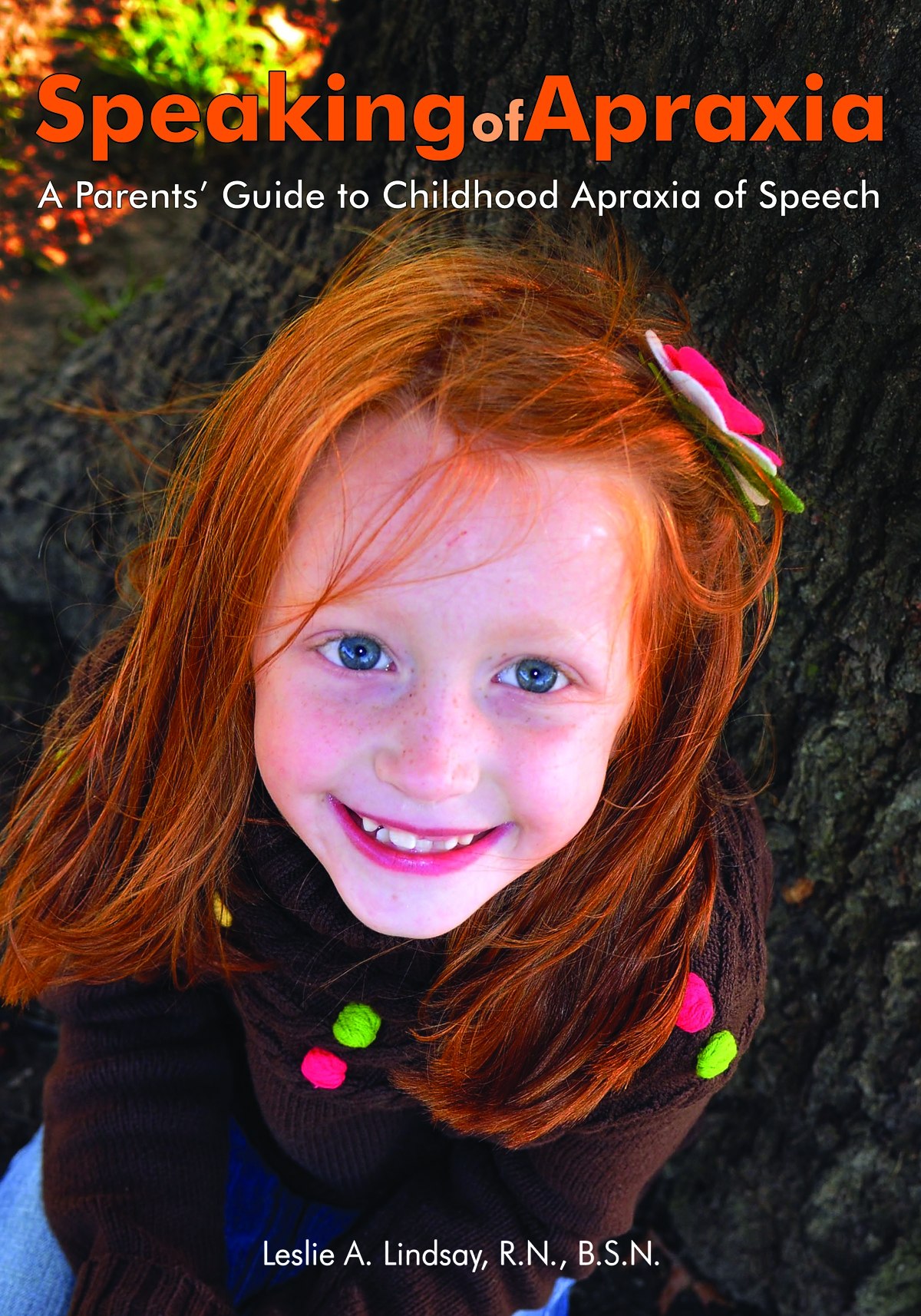
You may have been searching for years for some term to identify why your child isn’t talking like every other child. Perhaps you weren’t that concerned in the first place, but took your child to a speech-language pathologist because your friends, your mother, or a concerned neighbor or teacher urged you to. In either case, you now have a word to describe the phenomenon: Childhood Apraxia of Speech (CAS). What’s next?
Common Reactions
If it took you awhile to arrive at a diagnosis, you may be feeling like your competence as a parent has been challenged.
“Gosh, I knew there was something wrong, why wouldn’t (or couldn’t) anyone tell me what it was?!”
You may feel some resentment toward any professionals you consulted who shooed you away, assuring you everything was “fine.”
“I knew I was right! Those doctors were so incompetent. Their lack of competency and time wasted really irks me!”
You might feel like I did: relieved.
“Now I know what to call this thing that was preventing my little sweetie from saying much more than ‘eh?’”
But you could also feel discouraged, as I also did.
“What now? What does this mean for my kid? Will she ever be able to talk? Where do I go from here?”
Case in point: One of my playgroup mom friends said, “Oh, apraxia . . . that’s a tough one. I was so glad when Jackson didn’t have it after all. Call me if you want to talk about it.” I didn’t. Not to her, anyway. IfJacksondidn’t really have CAS, I didn’t want to get stuck talking with someone who would make it sound like the end of the world. Plus, I wanted to believe that it would be an easy fix.
Another mom friend of mine—who also has a daughter with apraxia indicated she felt naïve when she first got the diagnosis: “I just didn’t know what to think. Maybe one or two months of therapy and then she’d be talking normally.”
Really, the “fix” is somewhere in the middle. Receiving a diagnosis of CAS is pretty serious, but it’s not the end of the world, and it’s certainly not a quick fix. We’ll cover therapy approaches in Chapter 7.
Other feelings and emotions you might be experiencing after learning the diagnosis of CAS:
- Disbelief /uncertainty
- Confusion
- Denial
- Information overload
- Numbness
- Isolation
- Loss
- Shock
- Anger
- Guilt
- Sadness
- Yet, you may also feel acceptance, and even a proactive sense of duty
Here’s a blurb from my journal at the time, expressing my mishmash of feelings:
“I am feeling a bit dumbfounded about Kate’s diagnosis. I used to be in speech & debate [club]. I wrote and performed an oratory at a competition level; how could I possibly have a kid couldn’t talk?! Maybe I have been ‘chosen’ to help a little person—my Kate—navigate the road of apraxia. . . with my public speaking skills and child psych background, perhaps this is a perfect fit for parent and child. But I can’t help feeling like this is all too unfair—for me and for Kate.”
Some folks have a more positive reaction from the outset. They may even say they feel “blessed” or as though they were “chosen” to have a child with such a diagnosis. For example, here’s how one mother I spoke to came to terms with her child’s diagnosis:
“I’m a nurse in a neuro-rehab unit. We see a lot of patients who are suffering from brain injuries, stroke, and such. I know CAS isn’t really the same, but there are a lot of similarities. I have a good knowledge base of neurological issues, so learning about apraxia isn’t so out of my comfort zone.”
For now, sit tight with your feelings about your child’s diagnosis. Listen to them, accept them, and talk them over with someone such as a friend, your spouse, or your child’s SLP.
Where are you with coming to terms with your child’s apraxia diagnosis?
Leslie Lindsay, R.N., B.S.N. is the mother of a little girl recovering from CAS. Speaking of Apraxia: A Parent’s Guide to Childhood Apraxia of Speech is the first-ever book written for parents exclusively on this speech disorder. You can pre-order your copy now through the publisher, Woodbine House (www.woodbinehouse.com). The title is also being offered through Amazon (www.amazon.com).


 Leslie A. Lindsay
Leave a reply to leslie1218 Cancel reply